
UGC pushes universities to strengthen research, innovation, and industry collaboration. VIEW NOW →
 The Child We Failed to Hear

Why Silence Is Where the Real
Danger Begins

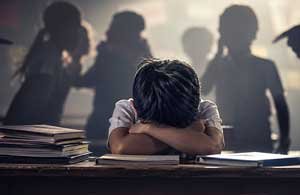
Across India, thousands of children silently carry emotional burdens that many adults never see — bullying, academic pressure, invisibility in the classroom, or the quiet belief that they are disappointing someone. Many never tell anyone. Four truths every adult needs to understand:

The Pain Adults Don't See
Children Speak Through Behaviour First
A child who suddenly becomes withdrawn may not be "misbehaving." A child who loses interest in studies may not be "lazy." Unlike a bruised knee, emotional wounds leave no visible scars — but they still need urgent attention.
Notice sudden silence, untouched lunch, or a child who walks alone.
The Hidden Epidemic
Bullying Is Not Character Building
Repeated bullying — laughter, exclusion, cruel nicknames, WhatsApp groups that leave one child out — can undermine confidence and has been linked to anxiety, depression and, in some cases, suicidal thoughts.
Never dismiss bullying as "part of growing up."
Marks Do Not Measure Worth
A Report Card Isn't a Verdict on a Child
A report card measures performance in one examination. It does not measure kindness, creativity, resilience, honesty — and it certainly does not measure the value of a human life.
Say "you're loved because you're our child" — not because of marks.
One Safe Adult Changes Everything
Belonging Is a Basic Emotional Need
A child who feels supported can often withstand enormous challenges. A child who feels completely alone may struggle under burdens that others cannot see. One caring adult can restore hope.
Be the adult who listens without judgement, every time.
 The Numbers Behind the Crisis

Statistics Should Never Feel Familiar

📊
Student Suicides in India
Student suicides are rising faster than the national suicide rate as a whole.
  • 14,488 student suicides recorded in 2024 — a record high
  • Roughly 40 students lost every day
  • Up about 4% on the previous year
NCRB, 2024
🌍
A Global Youth Crisis
Suicide is not only an Indian challenge — it is one of the leading causes of adolescent death worldwide.
  • #4 leading cause of death, ages 15–29
  • Rarely caused by one isolated event
  • Connection to supportive adults builds resilience
World Health Organization
🚫
Bullying, Worldwide
Bullying has expanded beyond the school gate into students' phones and evenings.
  • 1 in 3 adolescents bullied in the past month
  • Nearly 1 in 3 physically attacked in the past year
  • A serious, well-documented risk factor for schools to act on
UNESCO

Student Suicides in India — A Rising Curve

Recorded cases, year-wise
Source: NCRB, Accidental Deaths & Suicides in India

Who We Lost in 2024

Gender split of 14,488 student suicides
Source: NCRB, 2024
 The Responsibility We All Share

What We Can Do Today
So Fewer Children Lose Hope

Student well-being is a shared responsibility. If even one part of this support system fails, a vulnerable child can begin to feel isolated — when several parts fail together, the consequences can be devastating.

The Fifteen-Minute Conversation
A daily habit that can save a life
1
Ask "What made you smile today?" instead of only "Did you finish your homework?"
2
Ask who they sat with at lunch, and whether anyone was left out.
3
Give fifteen to twenty minutes of uninterrupted, judgement-free listening every evening.
4
Trust grows through consistency, not interrogation.
Warning Signs Teachers Should Know
One caring conversation can reveal what months of observation cannot
1
Sudden withdrawal from friends or frequent unexplained crying.
2
Repeated absence, loss of concentration, or persistent fear of attending school.
3
Significant behavioural change or visible anxiety in class.
4
Not every change is a crisis — but every significant change deserves attention.
Systems Schools Must Build
Rules only help if they are actively followed
1
A clear anti-bullying policy, plus confidential reporting and prompt investigation.
2
Trained counsellors, referral mechanisms, and regular teacher training.
3
Peer-support programmes and supervision of isolated areas on campus.
4
Celebrate kindness with the same seriousness as academic awards.
Success Without the Pressure
Love should never feel conditional on marks
1
Not every child needs to become a doctor or engineer to succeed.
2
Encourage excellence without linking it to a child's sense of being loved.
3
Say "you are loved because you are our child" — not because of your marks.
4
Celebrate effort and improvement, not just top ranks.
Lessons from Around the World
India can adapt proven ideas to its own context
1
Finland integrates student welfare services into everyday school life.
2
Japan emphasises collective responsibility and care for shared spaces.
3
Australia, Canada and the UK have expanded school-based counselling and social-emotional learning.
4
India doesn't need to copy another system — only adapt what works.
Digital Life & Mental Health
Teach responsible use, don't just restrict it
1
Online harassment can continue long after the school day ends.
2
Teach: never humiliate others online, never exclude classmates intentionally.
3
Always report cyberbullying rather than absorbing it silently.
4
Seeking help for emotional distress deserves the same openness as physical illness.
 CampusNewz's Call to Action

What Every Part of a Child's World Must Do

Parents
Listen before judging
Correct behaviour without attacking character
Celebrate effort, not just results
Create time daily for real conversation
Remind them: no exam defines their worth
Teachers
Never publicly humiliate a child
Encourage questions, recognise effort
Watch quietly for loneliness
Correct privately, praise kindness too
Make empathy central to classroom culture
Schools
Strengthen anti-bullying systems
Improve supervision of isolated areas
Ensure counselling or referral access
Train staff to spot warning signs
Celebrate kindness, not just marks
Students
Stand up for isolated classmates
Report bullying when you see it
Ask for help — it's a sign of courage
Keep reaching out if one person doesn't understand
Remember: you are not alone
Policy & Society
Expand mental health resources in schools
Strengthen child protection measures
Replace silence with compassion
Replace stigma with understanding
Treat student well-being as a national priority
 Prevention Starts at Home

When Should You Pay Closer
Attention?

Most children don't announce distress — they show it. Small shifts in daily routine, appetite, sleep and mood, noticed consistently over days and weeks, are often the clearest early-warning signal a parent or teacher will get.

A Parent's Attention Priority Through the Day

An illustrative guide, not a statistic — transition moments and bedtime are when children are most likely to open up
Morning · Before School
Routine Checkpoints
  • Did they eat breakfast, or skip it without reason?
  • Dragging their feet or making excuses to avoid school?
  • Vague complaints — stomach ache, headache, tiredness?
  • Unusually quiet or withdrawn at the breakfast table?
School Hours
What Teachers Should Notice
  • Sitting alone at lunch or during breaks?
  • Sudden drop in participation or concentration?
  • Avoiding group activities or specific classmates?
  • Frequent nurse or counsellor visits, no clear cause?
After School · Evening
Routine Checkpoints
  • Comes home unusually quiet or heads straight to their room?
  • Lost interest in hobbies they used to enjoy?
  • Sudden spike — or sudden avoidance — of phone use?
  • Noticeable change in appetite at dinner?
Night · Bedtime
Routine Checkpoints
  • Trouble falling asleep, or sleeping far more than usual?
  • Bedtime is often when children open up — use it gently.
  • Reluctance to talk about the next school day?
  • Any mention of feeling "tired of everything"? Take it seriously.
Emotional
  • Persistent sadness or irritability
  • Sudden mood swings
  • Talk of feeling worthless
Physical
  • Changes in sleep or appetite
  • Unexplained aches, fatigue
  • Neglecting personal hygiene
Social
  • Withdrawing from friends
  • Avoiding family gatherings
  • Sitting alone, being left out
Academic
  • Falling grades or effort
  • Loss of focus, missed deadlines
  • Skipping school or classes
Digital
  • Secretive phone behaviour
  • Distress after using social media
  • Searching worrying content online
One day, years from now, our children may not remember every lesson they studied. But they will remember how the adults in their lives made them feel. Every child deserves to be heard, deserves to be protected, and deserves the chance to grow into the future they dream of.
— A Final Reflection, CampusNewz Editorial Desk