
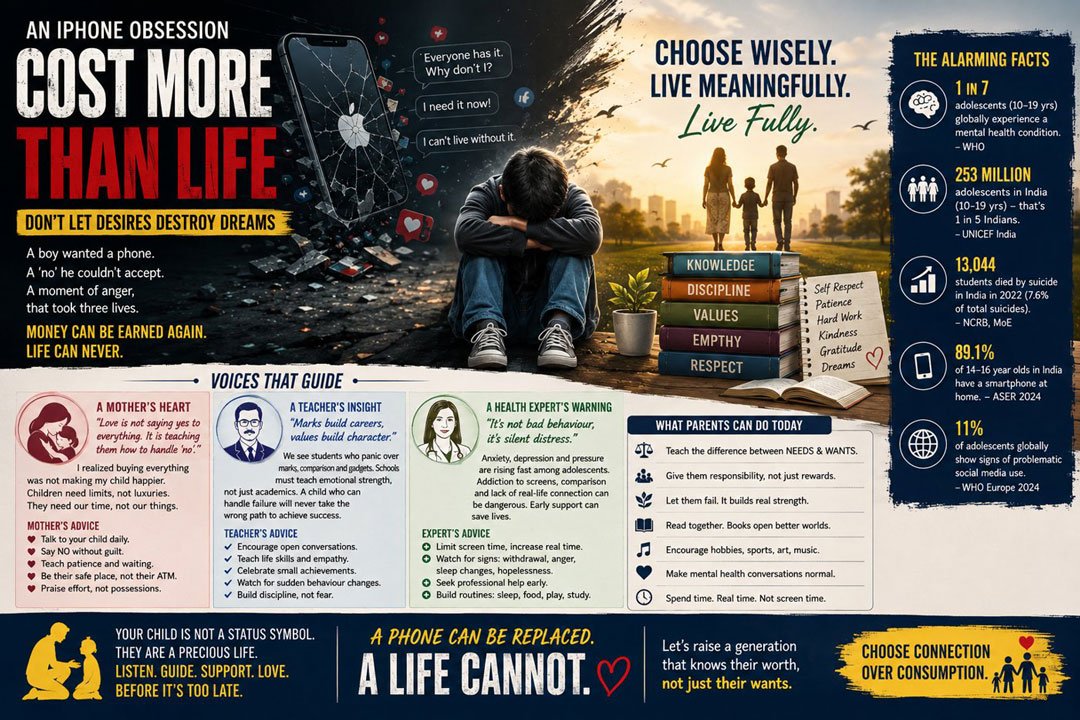
A recent tragedy in Chhatrapati Sambhajinagar, Maharashtra, took three lives in a family after a dispute reportedly linked to an expensive mobile phone. But the real question isn't whether a phone caused this. The real question is: why are some young people finding it increasingly difficult to cope with disappointment, comparison, financial limitations and the word "no"?
Almost every parent has heard some version of these sentences. The word "need" is often used for something that is actually a want — and there is nothing wrong with wanting. The danger begins when a child is never taught the difference.
Reading is not a magical cure for anxiety or addiction — a child in serious distress may need professional help. But reading, hobbies, sport, music, outdoor play and real conversation build a healthier childhood than a screen alone ever can. Perhaps the deeper problem isn't that children have stopped reading — it's that adults have stopped sitting with them long enough to make reading and reflection part of everyday life.
The most important intervention doesn't happen on a hospital bed — it happens at the dining table, when the child is eight, when the child is twelve, before the teenager enters college.
A dramatic behaviour should never automatically be dismissed as "bad behaviour." An adolescent's brain is still developing — powerful emotions can arrive before the maturity to regulate them does.