

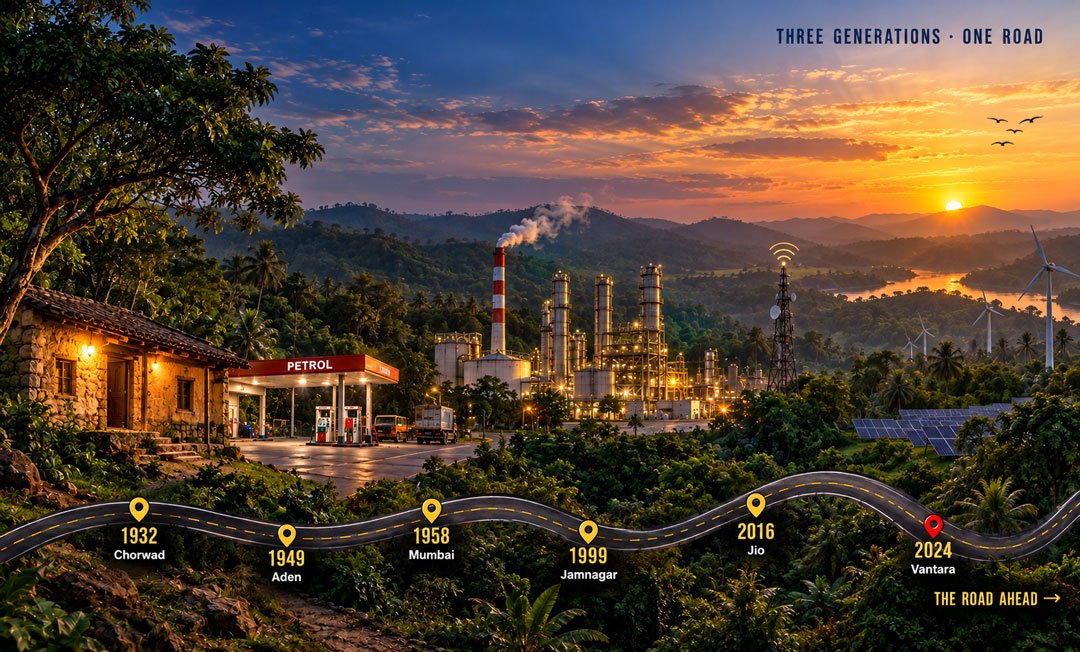
Picture a teenager in Aden in 1949, filling fuel tanks at a petrol pump. He is about seventeen, far from his village in Saurashtra, earning a few hundred rupees a month. In the evenings he watches the oil tankers in the harbour and tells anyone who will listen that one day he will own a refinery. People smile politely. Nobody believes him.
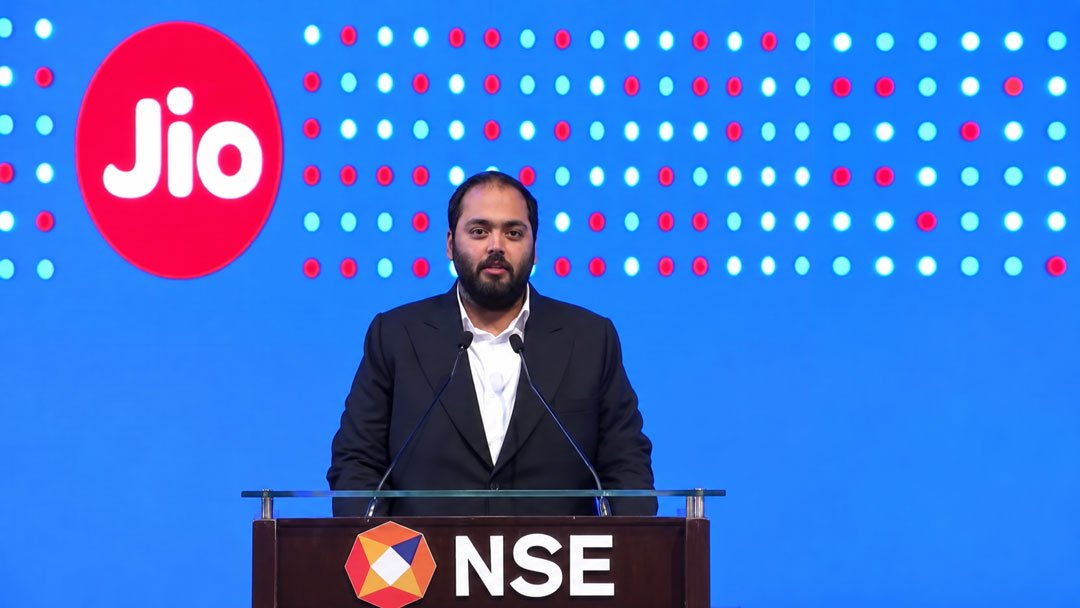
Now fast-forward seventy-seven years, to 28 October 2026. Jio Platforms — the digital company that teenager's family built — lists on India's stock exchanges at a valuation of roughly $108 billion, after the issue was fully subscribed within 100 minutes. On stage, a 31-year-old in a crisp outfit begins to speak. Not in boardroom English, but in warm, rolling Hindi. And the first person he thanks is the boy from the petrol pump.
The speaker was Anant Ambani. The boy was his grandfather, Dhirubhai Ambani. And for many who watched, the question arrived on its own: are we looking at Dhirubhai's new avatar?
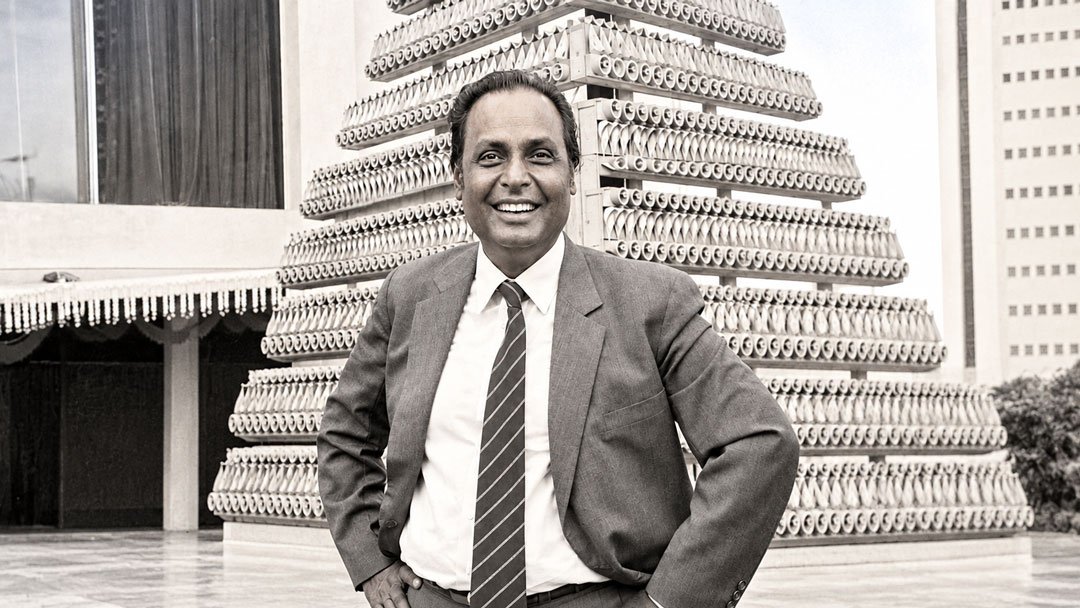
Behind every visionary are two classrooms. The first is the home, where a child learns to bow to elders, share food and say thank you. The second is the school, where that child learns discipline, curiosity and the courage to dream aloud. Dhirubhai was a schoolteacher's son. Anant's mother was a schoolteacher before she became Nita Ambani. Read this story not as a tale of billions, but as proof that values from home and school make you stronger, and make you a visionary.
The Speech That Brought a Grandfather Back
It was not a typical listing-day address. There were no slides about subscriber growth or debt ratios. Anant's speech began with gratitude and walked, almost like a family storyteller, through three generations.
He spoke of the modest home in Chorwad. Of a young man at a petrol pump in Aden who had no money and no connections, only a dream that seemed too large for him. Then of his father, Mukesh Ambani, who took that dream and turned a dry stretch of Jamnagar coastline into one of the world's largest refining complexes. And then he turned the credit around completely: "Jio, aapne banaya hai" — it was India's millions of users, not one family, who built Jio.
One line stayed with listeners long after the bell: for Anant, he said, business is puja — worship.
His Hindi, his pauses, the way he leaned into stories rather than statistics, reminded many viewers of Dhirubhai's own public style. Dhirubhai was famous for speaking to shareholders as though they were relatives at a family wedding. Mukesh Ambani, watching from the front, was visibly moved.
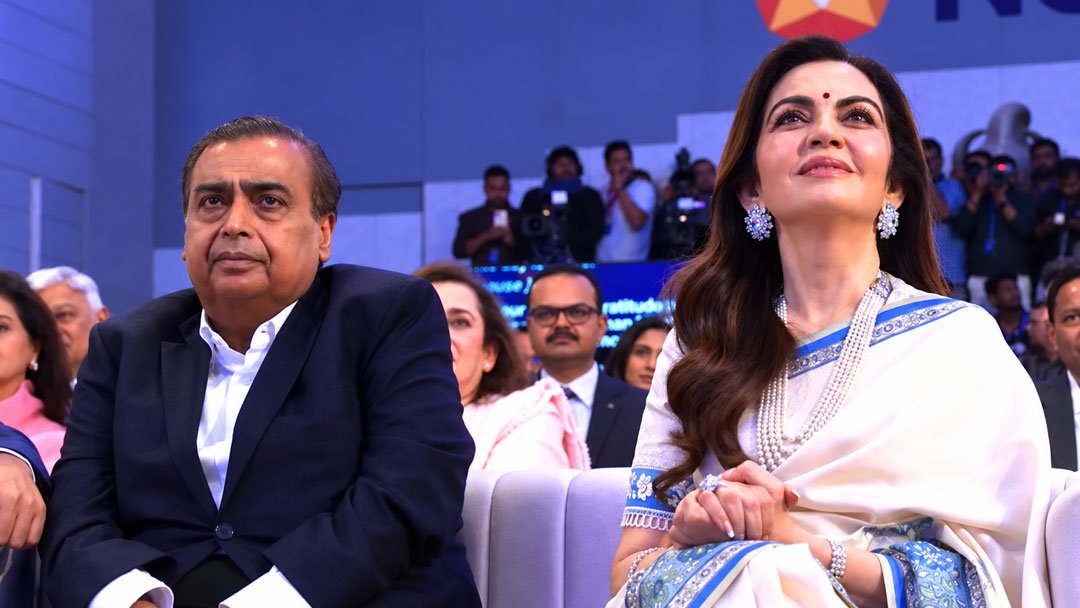
It was not the first time he had made the link. In August 2023, while inducting his three children onto the Reliance board, Mukesh said that he saw both his father and himself in Isha, Akash and Anant — adding that the moment reminded him of the day in 1977 when he himself joined the board. And in March 2024, at Anant's pre-wedding celebrations in Jamnagar, he spoke of how his youngest son reminded him of Dhirubhai, especially in his belief that nothing is impossible.
Chorwad to Dalal Street: The Road in Twelve Stops
To understand why one Hindi speech stirred so many memories, it helps to walk the whole road. Here is the journey of a family that went from a schoolteacher's home to the centre of Indian business — and is now trying to steer it towards forests and solar panels.
Look at the gap. Dhirubhai was 44 when Reliance went public and 66 when his refinery dream came true. Anant packed a board seat, a sanctuary, a pilgrimage and India's biggest listing into the years between 28 and 31. The grandfather had to climb to the starting line; the grandson begins on it. That is precisely why the next forty years of his road, the dashed line, will matter more than the first thirty.
The Dhirubhai DNA: Five Mantras, Two Generations Apart
Dhirubhai rarely wrote management books. He spoke in short, punchy lines that his employees remember to this day. Put those mantras next to what Anant has said and done, and a pattern begins to appear.
- "Think big, think fast, think ahead."Dhirubhai: from a one-room office to a refinery in a single lifetime. Anant: on the night he introduced Vantara in 2024, he said, "My grandfather said, 'Dare to dream', so I dreamt and made it a reality."
- "Ideas are no one's monopoly."Dhirubhai: believed an ordinary Indian could out-dream anyone. Anant: handed Jio's success to its users — "Jio, aapne banaya hai."
- Treat shareholders like family.Dhirubhai: filled stadiums with small investors and spoke to them in their own language. Anant: chose Hindi over English on India's biggest listing day.
- Never stop at "impossible".Dhirubhai: asked for an earthquake-proof refinery on a seismic coast. Anant: the trait his father says reminds him most of Dhirubhai.
- Stay rooted.Dhirubhai: never stopped being the boy from Chorwad. Anant: "business is puja", temple visits, a padyatra on foot.
Jamnagar: One Land, Four Dreams
If you want to see the bond between grandfather and grandson in a single place, go to Jamnagar. Few pieces of land anywhere carry so many chapters of one family's ambition.
⛽ A refinery born in Aden
He first imagined owning a refinery while working in Aden in the 1950s. Jamnagar was where that dream finally landed.
🏭 Built in 36 months
Commissioned in 1999, the complex now processes about 1.24 million barrels a day, with its own port, power plant and desalination unit.
🥭 A garden of lakhs
Dhirubhai wanted a green refinery and sent experts to Israel to learn how to grow a garden in a desert. The result: the Dhirubhai Ambani Lakhibaug Amrayee, a mango orchard spread over some 600 acres with 200-plus varieties.
🐘 Vantara
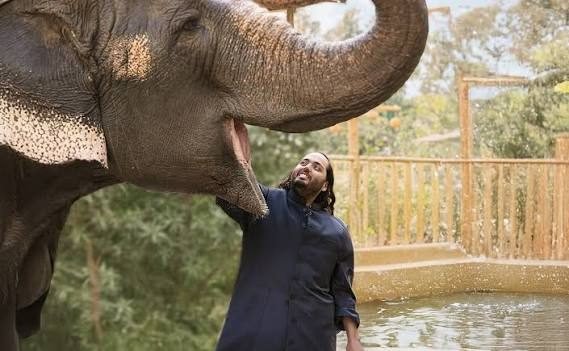
In that same green belt, Anant built a centre for rescued animals: elephants from logging camps, big cats, reptiles and birds, cared for by vets and specialists.
Grandfather planted trees on barren land. Grandson gave that land to animals.
The site that became shorthand for industrial ambition is now also known for conservation — and, with the Dhirubhai Ambani Green Energy Giga Complex being commissioned next door, for the next energy revolution.
Jamnagar in acres: how the green dream grew
From Petroleum to Green Energy
Dhirubhai's world was polyester, petrochemicals and refining. Anant's world is solar cells, battery storage, green hydrogen and fuel cells. The industries could hardly be more different. The temperament is strikingly similar.
Reliance has said it wants to build its new-energy businesses at "Jamnagar scale". Anant, who sits on the boards that oversee these ventures, is part of that bet. The challenge is enormous: the companies that make clean energy cheap and reliable will shape the next fifty years, just as cheap polyester and fuel shaped the last fifty.
| Dhirubhai's era | Anant's era | |
|---|---|---|
| The fuel | Crude oil, naphtha, polyester | Sunlight, hydrogen, batteries |
| The big bet | A refinery nobody thought a trader could build | Giga-factories for clean energy |
| The audience | Small investors in football grounds | Crores of Jio users and IPO applicants |
| The language | Gujarati and Hindi, straight from the heart | Hindi, on India's biggest listing day |
| Beyond profit | A green refinery and a mango orchard | Vantara and animal welfare |
The Ambani Values: Wealth Is Not the Whole Story
Beyond the balance sheets, the Ambani family's public life offers a window into a set of very Indian values: hospitality, respect for elders, sharing food, and faith. None of these show up in a quarterly result. All of them show up in how people remember you.
Every guest is God
A warm welcome at the door, food served with the hosts’ own hands, and a gracious farewell, whether the guest is a head of state or a villager.
Bow first, talk later
Touching the feet of elders is not reserved for family. Status does not decide who receives respect.
Celebrations are shared
A family occasion becomes a community meal, served by the family's own hands.
Faith as an anchor
Temple visits, a padyatra to Dwarka, and the idea that work itself is a form of worship.
Gratitude, out loud
From Dhirubhai thanking small shareholders to Anant crediting every Jio user.
"Three bodies, one soul"
Mukesh Ambani's description of his children at the 2026 AGM — a family that works as one unit.
Five Moments That Spoke Louder Than Wealth
Grand weddings and glittering guest lists made headlines around the world. But the moments people kept sharing on their phones were much smaller — and much more human.
The hosts who served the food themselves
At most big Indian weddings, the hosts sit on a stage while caterers serve the guests. At Anant and Radhika's celebrations, the Ambani family did something few expected: they served food to their guests with their own hands. Family members moved between the tables and the serving counters, filling plates, making sure nobody was missed, and asking guests whether they had eaten well.
It did not matter who was holding the plate. The family served villagers from around Jamnagar and global celebrities with the same warmth and the same food. Poor or rich, famous or unknown, every guest was welcomed the same way.
Same smile.
Same hands.
This is Atithi Devo Bhava (the guest is God) in practice. A child who grows up watching parents serve guests with their own hands learns a lesson no school textbook can teach: how you treat people says more about you than what you own.
The café owner who received a bow
During the wedding celebrations, Anant met Shanteri Nagesh Nayak, the elderly owner of Mumbai's beloved Café Mysore, whose food has been part of the family's life for decades. He excitedly introduced her to his bride Radhika — and then both bent down and touched her feet. Sister-in-law Shloka Ambani joined them.
Anna Seva: the family serves dinner
Before the glamour of the pre-wedding festivities began, the Ambani family began with Anna Seva — serving traditional Gujarati food to tens of thousands of villagers from the area around Reliance's township. Anant and Radhika were among those serving. Reports put the number fed at around 51,000.
A wedding for fifty other couples first
Days before their own wedding, the family organised a mass wedding for more than fifty couples from underprivileged families, with gifts and household essentials for each new home.
170 km on foot, mostly at night
Ahead of his 30th birthday, Anant walked from Jamnagar to the Dwarkadhish temple, roughly 170 km, covering stretches each night while managing health conditions he has spoken about openly. Pilgrims and villagers joined him along the way; his mother and wife met him at the end.
Did You Know? Eight Facts About the Road From Chorwad
The weekend snack seller
As a schoolboy, Dhirubhai is said to have sold bhajiyas to pilgrims at Girnar to earn pocket money.
The silver coin trick
In Aden, the story goes, he noticed the silver in Yemeni rial coins was worth more than their face value — an early sign of his eye for opportunity.
Vimal was a family name
The famous "Only Vimal" brand took its name from Dhirubhai's nephew, Vimal.
Stadium-sized AGMs
Reliance's shareholder meetings in the 1980s were so crowded they moved to sports grounds.
Built for the big one
Dhirubhai insisted the Jamnagar refinery withstand severe earthquakes. When the 2001 Gujarat earthquake struck, it was not damaged.
Sea water on his 66th
He inaugurated Jamnagar's desalination plant on his own birthday.
Asia's largest mango orchard
The orchard grown on the refinery's barren land is often described as the largest in Asia.
An offer to 80 hippos
In April 2026, Vantara offered to take in 80 hippos Colombia planned to cull — a story that went global.
Vantara: Anant's Personal Mission
If Dhirubhai's signature was a refinery, Anant's may turn out to be a sanctuary. Vantara focuses on rescue, rehabilitation, specialised veterinary care and conservation. Anant has spoken of animal welfare as a deeply personal calling since childhood — the kind of commitment that does not show up on a profit-and-loss statement.
The project has also faced scrutiny. Questions raised by conservation groups reached the Supreme Court, which set up a Special Investigation Team. In September 2025, the Court accepted the team's report, which found no violation of law in Vantara's animal acquisitions, and closed the matter. Critics still ask for more public disclosure; supporters point to the court's finding. Both sides agree on one thing: few private projects in India have put animal welfare under such a bright spotlight.
The First Classroom: Values From Home and School
Strip away the refinery, the telecom network and the stock-market bell, and this is a story about something every family and every school already has: the values we hand to children before they are old enough to know they are receiving them.
Notice how often teachers appear in it. Dhirubhai grew up in the home of a village schoolteacher, Hirachand Gordhanbhai Ambani, in Chorwad. There was little money in that house, but there was respect for learning, and a son who believed he could go further than anyone expected. Two generations later, Anant's mother, Nita Ambani, was a schoolteacher before her marriage. In 2003 she founded the Dhirubhai Ambani International School in Mumbai, named after the grandfather, where the Ambani children went to school.
So when Anant bows to a café owner, serves food to villagers or thanks a crore of Jio users, he is not performing a corporate script. He is doing what he was taught at the dinner table and in the classroom.
🏠 Sanskar: who you are
Touching the feet of elders. Sharing food before eating. Saying thank you out loud. Faith that keeps you grounded when success arrives. These are learnt at home, long before any degree.
🏫 Shiksha: what you can do
Discipline, curiosity, the confidence to stand at a podium and speak, and the habit of asking "why not?". A good school turns a child's values into abilities.
🔭 Strong roots + wide wings = a visionary
Values from home make you strong: they keep you steady in failure and humble in success. Learning from school makes you capable. Put them together with a dream, and a petrol-pump attendant imagines a refinery, and his grandson imagines a sanctuary in its green belt.
What parents and teachers can take from this story
Teach respect that ignores status
Let children see you greet the security guard, the cook and the CEO the same way. The Café Mysore moment was not taught in a boardroom.
Let them dream bigger than their address
Dhirubhai's family had no money, but nobody told him his dream was too big. Encourage the "impossible" idea before correcting it.
Make gratitude a daily habit
A child who learns to say "you made this possible" grows into a leader who says "Jio, aapne banaya hai."
Give them roots: language, faith, family
Anant chose Hindi on India's biggest stage. Comfort in your own language and culture is a source of confidence, not a limitation.
Three Generations, One Evolving Ambition
Dhirubhai Ambani (1932–2002)
"If you don't build your dream, someone will hire you to help build theirs." — a line widely attributed to him
Started with almost nothing and built an industrial group from scratch. Taught ordinary Indians that they could own a piece of a big company.
Mukesh Ambani
"Today I see both my father Dhirubhai and me in Isha, Akash and Anant." — 2023 AGM
Turned the refinery dream into Jamnagar, then took Reliance into telecom, retail and digital services at a scale that reshaped Indian daily life.
Anant Ambani
"My grandfather said, 'Dare to dream', so I dreamt and made it a reality." — Jamnagar, March 2024
Executive Director at Reliance, linked to the new-energy push and to Vantara. Carrying the family's ambition into green technology and conservation.
So, Is Anant Really Dhirubhai's New Avatar?
Where the comparison holds
The Hindi storytelling, the public gratitude, the refusal to accept limits, and the instinct to include ordinary people in the family's biggest moments. His own father sees it, and said so before the listing speech ever happened.
Where it doesn't — yet
Dhirubhai started with nothing and created an empire. Anant started inside one. His challenge is not to build from zero but to take a giant into industries that do not exist at scale yet. That is a different test, and it will take years to judge.
What should we really be watching?
Not the size of the next deal, but whether the values travel with the money: respect for every guest, sharing with the community, gratitude to the people who make success possible.
History will make its own judgement, as it should. Dhirubhai's place in Indian business was earned over five decades of risk, setbacks and building. Anant is only at the beginning of his road.
But perhaps the most meaningful inheritance is not a refinery, a telecom network or a share price. It is a way of looking at the world: dream bigger than your circumstances, bow to those who helped you, share your table with your neighbours, and never forget the village you came from.
The boy at the petrol pump in Aden dreamt of a refinery. His grandson, standing on India's biggest stage, chose to say thank you first. Maybe that is how a legacy really continues — not in the same industry, but in the same spirit.
And that spirit is not inherited with shares. It is planted at home, nurtured at school, and grown by every child who is taught to respect people, share what they have and dream without limits. That is how ordinary children become strong, and how strong children become visionaries.