
Beyond Headlines. The Complete Story.
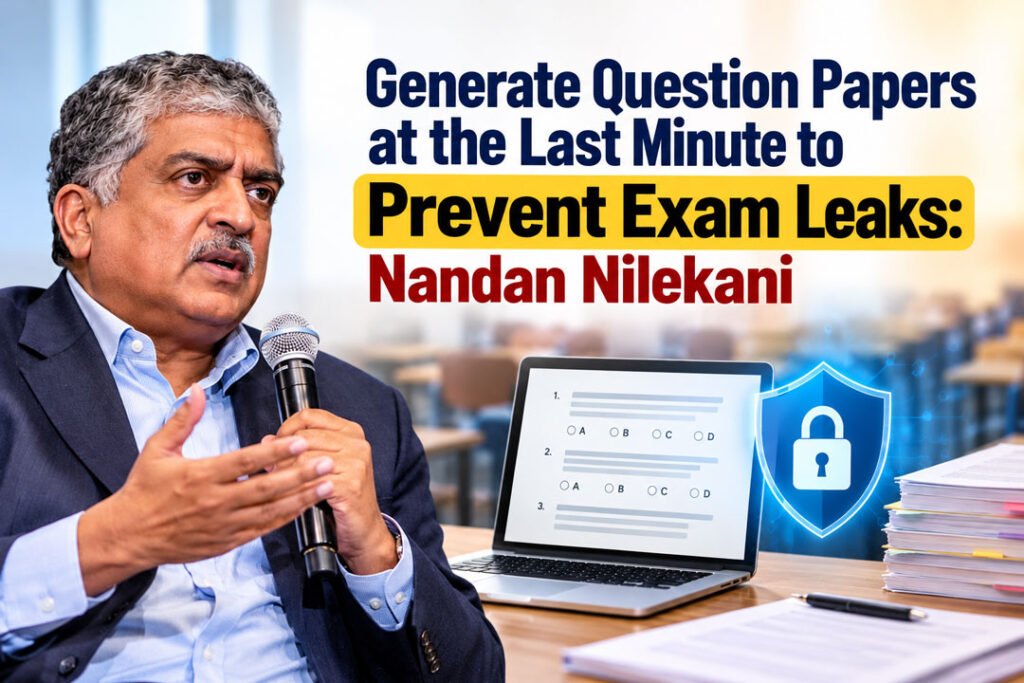
India could prevent question paper leaks in high-stakes entrance examinations by generating question papers at the last minute from a large, secure question bank, according to Infosys co-founder Nandan Nilekani.
Speaking at the Bloomberg New Economy Forum 2026 in Delhi, Nilekani questioned the need to prepare examination papers well in advance. He suggested that a technology-driven system could generate papers shortly before examinations, reducing opportunities for leaks and the advance sale of question papers.
Nilekani, who chairs the high-powered task force on examination reforms, also said that Prime Minister Narendra Modi was keen to implement the panel’s recommendations.
He argued that the existing practice of preparing and storing question papers in advance creates opportunities for malpractice. A system that generates papers just before an examination could significantly reduce this risk by limiting the time during which confidential questions are accessible.
“Why do we need to have something called a question paper?” Nilekani asked, highlighting the potential of a large question bank from which examination papers could be assembled immediately before the test.
According to his proposal, this approach could eliminate the incentive for advance leaks and sales of question papers, strengthening the integrity of competitive examinations.
The suggestion comes amid continuing concerns over examination security in India, where entrance tests play a crucial role in admissions to higher education institutions and professional courses.
If implemented effectively, the technology-led approach could mark a major shift in examination management, making assessments more secure and reducing opportunities for manipulation. However, its success would depend on robust cybersecurity, reliable technology infrastructure and transparent procedures to ensure fairness for all candidates.
**Can last-minute question paper generation become a practical solution to India’s examination leak problem?** The proposal places technology at the centre of the debate over examination reform and public trust.