
Agriculture Stream
From field to future — Agriculture in India has evolved from a traditional occupation into a technology-driven, innovation-rich sector covering crop science, agri-tech, food processing, biotechnology, and sustainable farming, offering impactful careers with national significance.
Overview
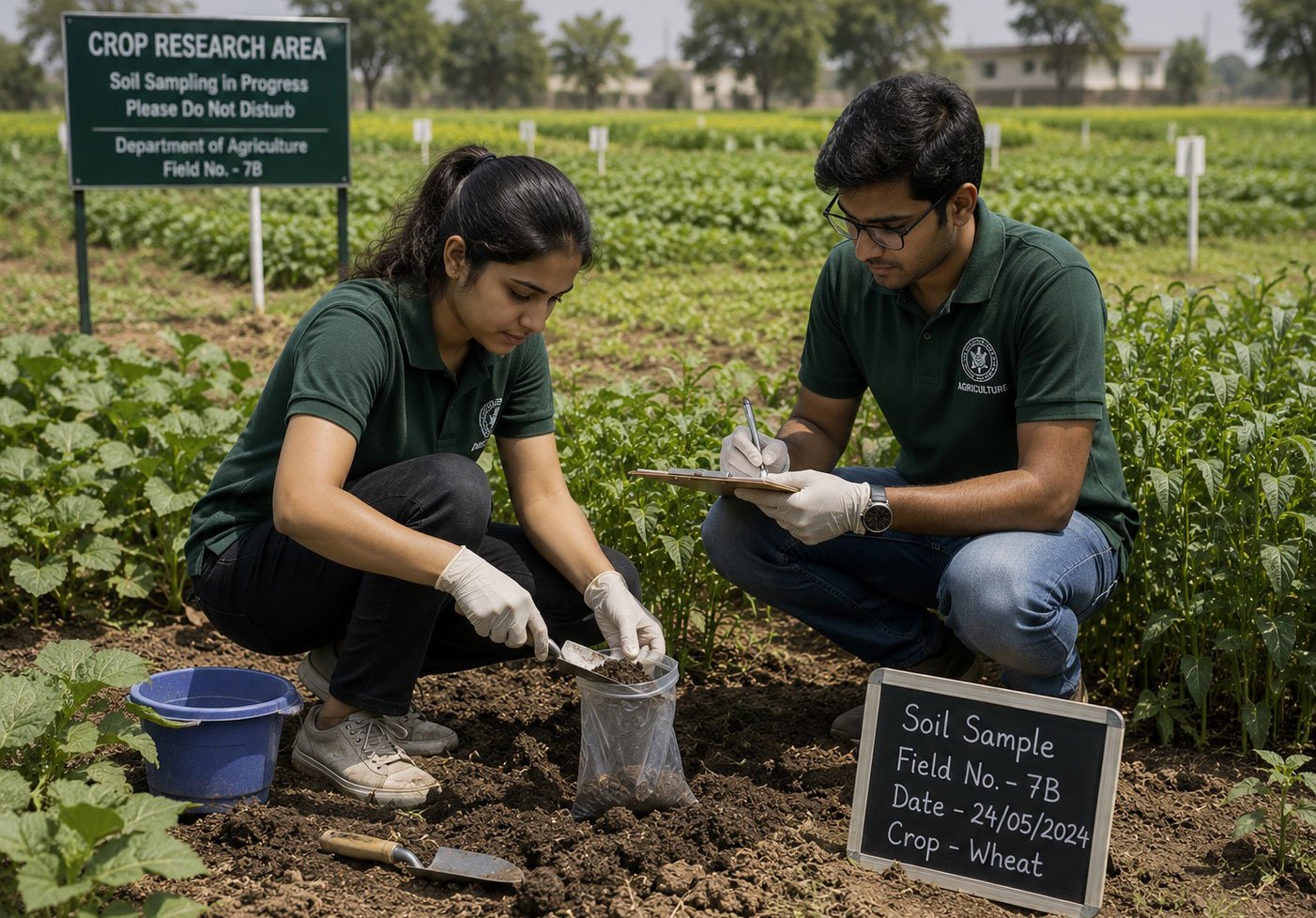
Agriculture in India is not just a traditional occupation — it is a modern, technology-driven sector that plays a crucial role in the country's economy, food security, and rural development. With advancements in science, biotechnology, and digital agriculture, the field has evolved into a multidisciplinary domain offering diverse career opportunities.
Agriculture streams focus on crop production, soil science, animal husbandry, agribusiness, biotechnology, and sustainable farming practices. Students gain knowledge of both traditional farming methods and modern technologies like precision agriculture, drones, and smart irrigation systems.
In India, agriculture-related programs are offered as B.Sc Agriculture, B.Tech Agricultural Engineering, B.Sc Horticulture, Forestry, Dairy Technology, and Fisheries Science, followed by postgraduate programs like M.Sc, M.Tech, MBA (Agri-Business), and PhD. Agriculture professionals contribute to food production, rural development, environmental sustainability, and agri-innovation.
Agriculture is one of the fastest-evolving sectors in India, driven by technology, sustainability, and increasing demand for food and agri-products. With the rise of agri-tech startups, government support, and global demand for organic and processed food, agriculture offers a stable, impactful, and future-ready career path across industries.
Agriculture requires a blend of scientific knowledge, practical field skills, and management abilities — combining deep domain expertise in crop and soil science with modern agri-tech tools, data analytics, and business acumen to solve India's most critical food and sustainability challenges.
India's agriculture sector is undergoing a major transformation with technology and sustainability at its core. Government initiatives and increasing private investment are creating massive opportunities for agriculture professionals in these cutting-edge domains.
AI, IoT sensors, agricultural drones, satellite imaging, and data-driven decision platforms are transforming traditional farming into precision agriculture. India's agri-tech startup ecosystem has grown to 1,000+ companies receiving $1.5 billion in funding annually. Smart farming enables yield improvement of 20–40% while reducing input costs through real-time monitoring and predictive analytics.
India is the world's largest producer of organic farmers (2.5 million+) and has 4.7 million hectares under organic certification. The organic food market in India is growing at 25% annually. Sustainable farming — including zero-budget natural farming, permaculture, and regenerative agriculture — is being actively promoted by state governments with direct income benefits for farming households.
India's food processing industry is projected to reach $535 billion by 2025-26, growing at 11% annually. The Government's PLI scheme for food processing has attracted ₹10,900 crore in investments. Food technologists, quality control specialists, and supply chain managers are among the most in-demand agriculture graduates in India's packaged and processed food sector.
Precision agriculture uses GPS, remote sensing, AI, and variable rate technology to optimise the use of water, fertilizers, and pesticides — reducing input costs by 15–30% while improving yields. India's precision agriculture market is growing at 13% annually. ICAR and state agricultural universities are integrating precision farming into undergraduate curricula.
GM crops, CRISPR gene editing, molecular markers, and tissue culture are revolutionising plant breeding and crop improvement. India's agri-biotech market is growing at 18% annually. Biotechnology-trained agriculture graduates work at ICAR institutes, private seed companies (Mahyco, Rasi Seeds, Nuziveedu), and multinational agri-science companies like Corteva and Syngenta.
India loses 15–18% of its fruit and vegetable production annually due to inadequate cold chain infrastructure — creating a massive opportunity for supply chain professionals. The government's ₹8,000 crore PM Kisan Sampada Yojana and Micro Food Processing scheme are creating 100,000+ supply chain and logistics jobs for agriculture graduates in cold storage, warehousing, and distribution management.
Urban farming, rooftop gardens, vertical farming, and hydroponics are growing rapidly in Indian metro cities where land is scarce but demand for fresh local produce is high. Hydroponics ventures can generate ₹15–30 lakh per 1,000 sq ft annually. Agri graduates with hydroponics, controlled environment agriculture (CEA), and urban farming expertise are establishing successful agri-startups.
With India facing increasing climate variability — erratic monsoons, temperature extremes, and groundwater depletion — climate-resilient crop varieties, drought-tolerant farming systems, and adaptive agricultural practices are critical national priorities. ICAR's National Initiative on Climate Resilient Agriculture (NICRA) is training 1 million farmers annually, creating demand for climate-smart agriculture specialists.
Agriculture undergraduate programs in India are 4-year degrees offered at State Agricultural Universities (SAUs), central universities, and private deemed universities. The ICAR accreditation system ensures quality standardisation across institutions. MCA equivalent in agriculture is M.Sc Agriculture via ICAR AIEEA PG.
Agriculture programs require a strong Class 12 foundation in the sciences. ICAR AIEEA is India's most prestigious agriculture entrance exam — conducting merit-based admissions to all ICAR institutes and central agricultural universities across India.
ICAR AIEEA is the gold standard for agriculture admissions in India — providing access to IARI (India's best agricultural research university), NDRI, PAU, and all State Agricultural Universities. Plan early and prepare for state-level exams as backup for maximum options.
Conducted by NTA on behalf of ICAR, ICAR AIEEA (All India Entrance Examination for Agriculture) is India's premier agriculture entrance exam providing access to all ICAR institutes, deemed agricultural universities, and state agricultural universities participating in centralised counselling.
Conducted by NTA, CUET UG provides admission to agriculture programmes at BHU Varanasi (one of India's oldest and most prestigious agriculture schools), AMU Aligarh, and other central universities — offering government-funded, high-quality agriculture education at ₹15,000–₹60,000 per year.
Every major state with significant agricultural production — Karnataka, Maharashtra, Andhra Pradesh, Telangana, Punjab, Rajasthan, Uttar Pradesh — conducts its own entrance exam for admission to State Agricultural Universities (SAUs) — offering domicile reservation advantages and state government scholarships for local students.
Leading private universities — Amrita Vishwa Vidyapeetham, SRM University AP, LPU, Galgotias, and Amity — offer B.Sc Agriculture and allied programmes with merit-based or direct admissions, strong research infrastructure, and industry connections to agri-business, food processing, and agri-tech companies.
Agriculture salary varies significantly by specialisation, sector, and role — from stable government positions to high-growth agri-business and agri-tech careers. Entrepreneurs in organic farming, food processing, and agri-tech can earn significantly higher than salaried roles.
Agriculture graduates are employed across India's entire agri-ecosystem — from ICAR research institutes and government agriculture departments to FMCG giants, agri-tech startups, food processing companies, and international research organisations. No sector in India offers wider government employment than agriculture.
Agriculture today is no longer limited to farming — it is a dynamic, innovation-driven sector that combines science, technology, and business. For students seeking a meaningful career with real-world impact, agriculture offers vast opportunities to contribute to food security, sustainability, and economic growth.
IARI New Delhi is India's undisputed #1 agricultural university — the institution that led India's Green Revolution. Punjab Agricultural University Ludhiana and TNAU Coimbatore are the strongest regional institutions. For private agriculture education, Amrita Vishwa Vidyapeetham and LPU lead the rankings.